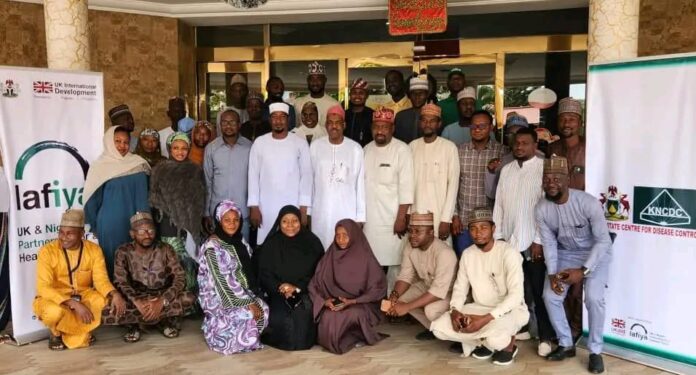
The Kano State Centre for Disease Control (KNCDC) has trained journalists, broadcasters, and social media influencers on responsible health reporting, stressing that inaccurate information during disease outbreaks can worsen public panic and undermine response efforts.
The two-day workshop, held recently in Kaduna, brought together media professionals from Kano as part of the agency’s strategy to strengthen emergency health communication and curb misinformation during outbreaks.
Speaking at the event, the Director-General of KNCDC, Professor Muhammad Adamu Abbas, said the media play a decisive role in shaping public response during health crises and must prioritise fact-based reporting.
He urged journalists and social media influencers to verify information with KNCDC before publishing reports on disease outbreaks, warning that speculation and unverified claims could escalate fear and disrupt containment efforts.

Citing Nigeria’s experience during the Ebola outbreak, Prof. Abbas said misinformation had the potential to compound emergencies, noting that disease outbreaks require strict scientific verification.
“There are at least 11 steps involved in confirming an outbreak,” he said. “Reporting suspected cases as confirmed outbreaks without due process can do more harm than good.”
The KNCDC director said the workshop was designed to equip participants with the skills to report accurately, ethically and responsibly, while also strengthening collaboration between the agency and the media.
According to him, health emergencies—including disease outbreaks, pandemics, epidemics and environmental disasters—spread rapidly and often generate fear and uncertainty, making effective communication critical.
He explained that the Kano State Government established KNCDC to coordinate health emergency preparedness, response and communication, adding that partnership with the media was essential to achieving these goals.
By engaging journalists and social media influencers, Prof. Abbas said the agency aimed to amplify verified health information, counter misinformation and promote a unified public response to health threats.
He encouraged participants to serve as ambassadors of KNCDC, helping to disseminate accurate health information within their communities.
Prof. Abbas outlined the media’s responsibilities during health crises, describing journalists as a primary source of information for the public.
According to him, the media play a key role in amplifying official health messages, shaping public perception and behaviour, bridging the gap between authorities and communities, and countering rumours and misinformation.
He added that responsible reporting could also promote preventive behaviour and support disease control efforts.
Kano’s Public Health Challenges
Also speaking, KNCDC’s Infection Prevention and Control (IPC) officer, Habu Muhammad, said Kano State had experienced multiple public health emergencies in recent years, including cholera, Lassa fever, measles and substance abuse-related health challenges.
He said these emergencies had wide-ranging consequences, including illness, death and psychological trauma, as well as economic losses from medical expenses, reduced productivity and disrupted trade.
Mr Mama also noted the social impact of outbreaks, including stigma, discrimination, loneliness and social isolation, stressing the need for coordinated emergency response and effective public communication.
Call for Ethical Reporting
The Kano State Commissioner of Health, Dr. Abubakar Labaran Yusuf, emphasised the responsibility of journalists in managing information during health emergencies.
He urged participants to avoid sensational reporting that could trigger panic, while upholding the highest ethical standards.
Dr Yusuf highlighted the importance of respecting patient privacy, encouraging prompt reporting of suspected cases to health authorities, and educating the public on preventive measures.
He also called on journalists to promote early diagnosis of communicable and non-communicable diseases and to share accurate health information widely within their professional networks and communities.
The KNCDC Rapid Response Team (RRT) lead, Abbas Shehu, explained the different categories of disease reporting used by the agency.
These include immediate case reports, weekly and monthly aggregate cases, event-based reporting, and reports of diseases of international concern.
He said understanding these classifications would help journalists report health data accurately and in context.
Organisers said the workshop marked a step towards strengthening collaboration between KNCDC and the media, to improve public trust, reduce misinformation, and enhance Kano State’s capacity to respond effectively to health emergencies.