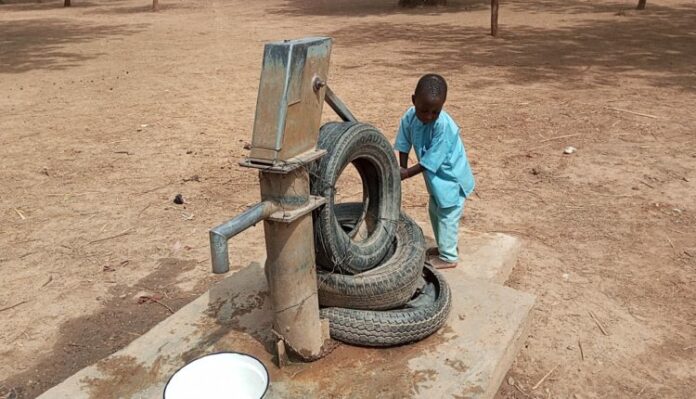
Over the years, the evident collapse of Nigeria’s public water infrastructure leads to deterioration in quality of water supply in use. Boreholes and hand-pumped water sources have become the primary lifeline for millions, particularly in northern states like Yobe and Jigawa.
According to a 2024 StatiSense report, Yobe State in the northeast tops the list, with 86% of adults relying on boreholes or hand-pump to access water while being followed by Jigawa state from the northwest with 76%.
Other northern states featured in the rankings include Katsina (61%), Borno (60%), and Kano (51%), indicating that a large portion of residents in these states depend on boreholes for their water needs.
Meanwhile, the Federal Capital Territory (FCT) has a 68% borehole accessibility rate, reflecting a mix of infrastructural development and the continued use of boreholes by residents despite being the nation’s capital.

Comparatively, the data shows that some states from southern Nigeria also have high borehole access rates. Anambra (75%), Rivers (74%), and Imo (71%) rank among the top five states, demonstrating a nationwide reliance on borehole and hand-pumped water as a primary water source.
Why Boreholes?
Experts attribute northern Nigeria’s reliance to collapsing public utilities, population growth, and rural-urban water gaps. Communities increasingly fund private or communal boreholes to offset erratic government supply. For instance, an NGO recently installed solar-powered boreholes in Yobe, Jigawa, and Kano to combat waterborne diseases like cholera—a direct response to unsafe public systems.
However, experts caution that this shift risks groundwater depletion and raises concerns over water quality, even as communities grapple with acute shortages.
Many communities, particularly in the North, have turned to private and community-funded boreholes to bridge the gap left by unreliable public water systems.
While boreholes remain a crucial source of clean water, concerns persist about groundwater depletion and the long-term sustainability of over-reliance on hand-pumped water.