The Federal Government (FG) has launched a new accountability-based healthcare financing framework that compels state governments to commit their own resources to primary healthcare improvements before accessing federal reimbursements, officials overseeing the programme have said.
The initiative, known as the Sector-wide Approach (SWAp), is aimed at improving efficiency, sustainability and measurable outcomes in Nigeria’s struggling primary healthcare system amid longstanding concerns over poor budget implementation and weak service delivery.
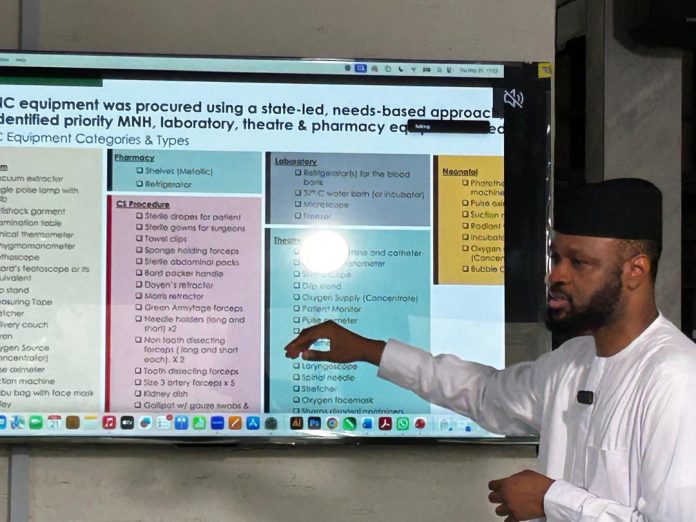
Under the programme, the FG has distributed medical equipment valued at nearly $200,000 per states to 250 secondary health facilities across the country to strengthen healthcare system.
Officials said the reforms mark a major departure from previous intervention models where federal allocations were often released without strong monitoring mechanisms or enforceable accountability measures.

Speaking during a stakeholder engagement in Abuja, the national coordinator of SWAp, Muntaqa Umar Sodiq, said states are now required to recruit healthcare workers through their formal civil service systems, revitalize health facilities using state funds and meet agreed performance targets before federal reimbursements are approved.
“What the programme is doing with states is ensuring that even if the federal government supports salaries in the first year, by the third year states must fully absorb those workers into their payroll,” Mr Sodiq said.
According to him, the framework is built around two key principles — sustainability and efficiency — to prevent the collapse of health interventions after donor or federal support ends.
The reforms are anchored on a “Unified Accountability Framework” embedded in a healthcare compact signed by all 36 states. The compact outlines performance targets, reporting obligations and compliance expectations for state governments, local councils and federal institutions.
Officials said quarterly reviews are now conducted to assess indicators including maternal mortality, reproductive healthcare outcomes, deployment of healthcare workers and facility revitalization.
States that meet agreed benchmarks are rewarded financially after independent verification processes.
Mr Sodiq said the arrangement has reduced the previous practice where federal funds were transferred directly to thousands of health facilities without adequate monitoring systems.
“For the first time, expectations are now in black and white,” he said, adding that the framework clearly defines reporting timelines, expected conduct and performance management standards for participating states.
The programme also expands the responsibilities of local governments, which are expected to support primary healthcare centres, emergency transport systems and digital healthcare infrastructure.
Officials disclosed that the National Health Insurance Authority has certified 259 comprehensive emergency obstetric and neonatal care facilities nationwide after inspections assessing blood availability, caesarean section capacity and emergency maternal healthcare readiness.
Data presented during the meeting showed healthcare utilisation has increased significantly since the reforms began, with quarterly visits to supported facilities rising from about 10 million at baseline to nearly 45 million visits.
The government said it is also tracking indicators such as skilled birth attendance, contraceptive prevalence, healthcare workforce deployment and the number of revitalized facilities across local governments.
Despite the reported progress, programme managers acknowledged challenges with healthcare workforce integration, noting that some states have delayed absorbing newly recruited health workers into their payroll systems.
Authorities also linked the reforms to broader efforts to address Nigeria’s worsening healthcare workforce shortages and brain drain crisis through investments in nursing and midwifery training institutions.
Mr Sodiq said the reforms are being implemented through collaboration involving state governments, the Federal Government, development partners and institutions including the World Bank.
He added that citizen feedback mechanisms, including public perception surveys, are also being integrated into the reforms to improve responsiveness and align interventions with the healthcare needs of Nigerians.